About Bio-Organic Catalyst
Bio-Organic Catalyst produces a line of proprietary product compositions, based upon its unique patented broad spectrum catalytic biochemistry, that establishes an entirely new platform technology for the chemical industry. The Bio-Organic Seal of SafetyTM is our commitment to offering the highest bio-aquatic safety on the market today. Click here to learn more about bio-aquatic toxicity and safety studies.
All Bio-Organic Catalyst products are produced in the United States and must meet the highest standards of quality.
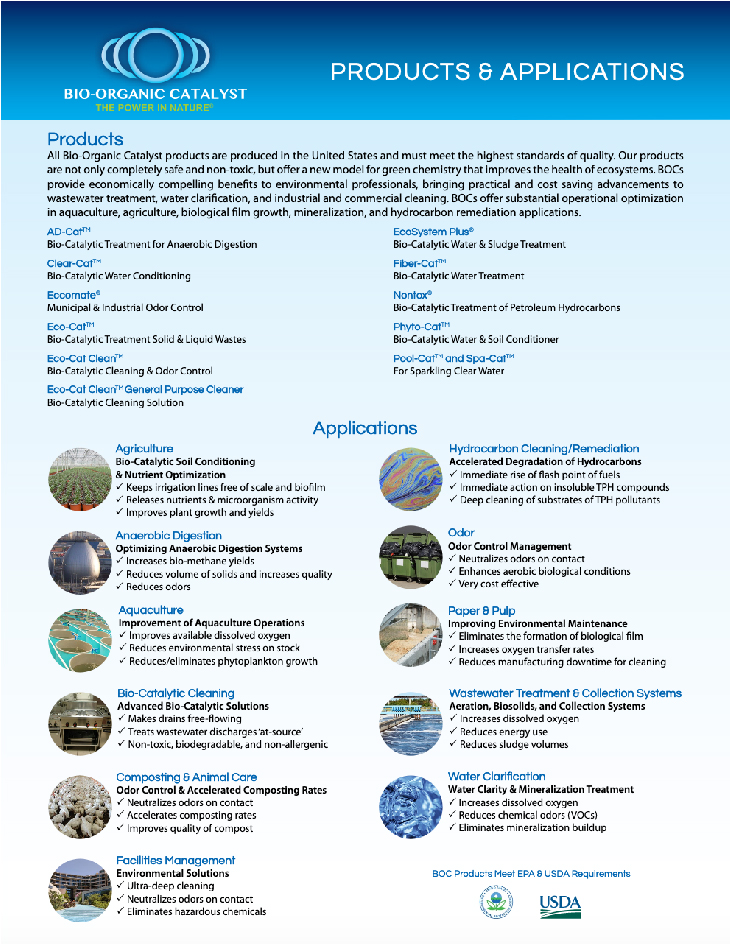
Download the BOC linecard
for product and application information.
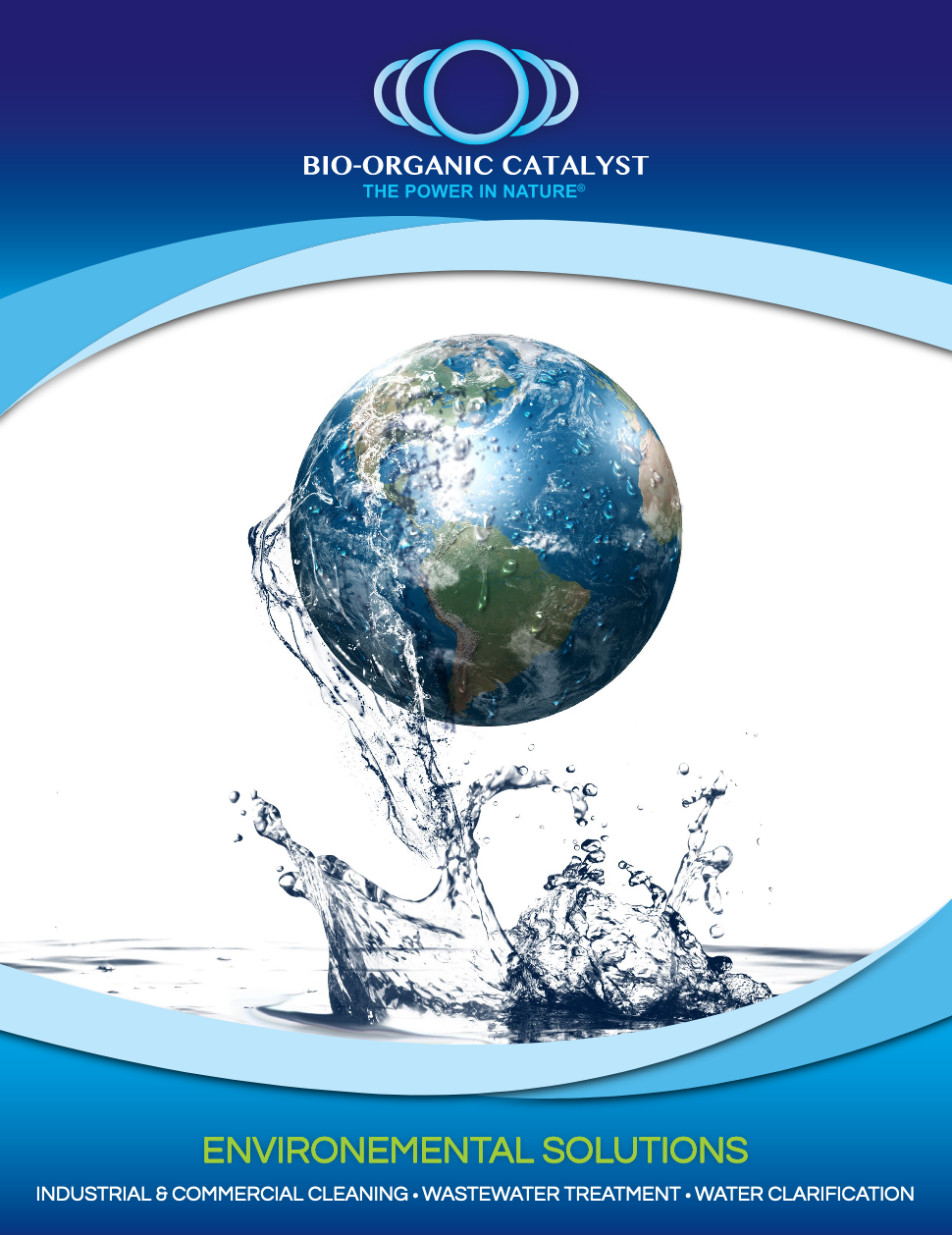
Download the BOC catalog,
information on Bio-Organic Catalyst.
Learn about our National Science
Foundation certifications.
Our products are not only completely safe and non-toxic, but offer a new model for green chemistry that improves the ecological health of ecosystems.
OUR STORY
Bio-Organic Catalyst is bringing about a fundamental transformation in the advanced purification of our water resources and the cleaning arts. Learn more here.
KEY FEATURES
The key attribute of Bio-Organic Catalyst’s BOCs is their ability to cause an immediate catalytic breakdown of the molecular structures of organic contaminates. Learn more here.

SCIENCE
BOCs have been perfected over many years of research and applications’ development based upon the Bio-Organic Catalyst patented composition formulations. Learn more here.
 The Bio-Organic Seal of Safety™ is our commitment to offering advanced green biocatalytic solutions that transform the treatment of our water. BOC product formulations have undergone rigorous independent testing, including leading recognized EPA certified laboratories.